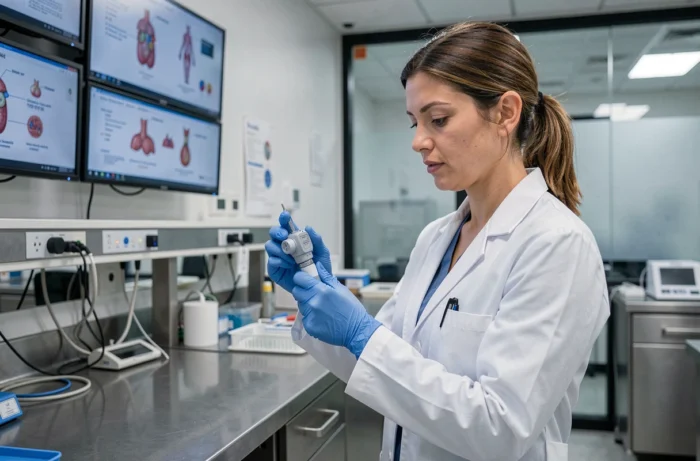
The FDA authorized more than 1,600 medical devices incorporating artificial intelligence in the United States in September 2026. This figure reflects a shift: medical innovations are no longer a distant promise; they are entering real care pathways, with regulatory approvals and verifiable clinical protocols.
Breakthrough medical devices: beyond robotic surgery
Competitors often approach surgical robotics as a showcase of health innovation. The FDA’s Breakthrough Devices program reveals a more diverse reality: as of June 30, 2026, 210 market authorizations had been granted under this framework.
These devices cover very specialized areas. They include tools for analyzing blood pressure, detecting bloodstream infections, portable neuromodulation, assisting in pulmonary diagnosis via ECG, and applying artificial intelligence to wound assessment. The trend is toward targeted technologies designed for conditions where late diagnosis worsens prognosis.
The common thread among these devices is that they address an unmet medical need or significantly improve an existing treatment, a necessary condition to obtain breakthrough status. The resources available on lasantedemain.com allow for tracking these developments in the Francophone medical landscape.
Medical AI and post-market surveillance: the real challenge of 2026
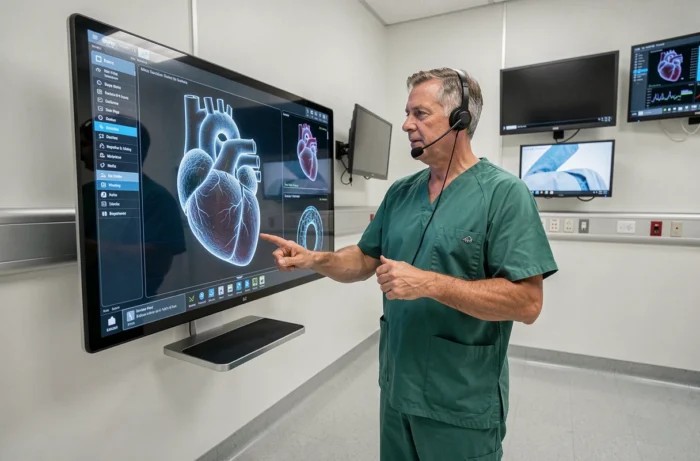
The stakes have changed. The initial authorization of a medical algorithm is only the first step. Monitoring the performance of a medical software after it hits the market presents unprecedented challenges compared to a traditional drug.
A radiology algorithm can receive software updates that alter its performance. The FDA has begun to structure a regulatory framework for these ongoing changes, distinct from the single approval process applied to pharmaceutical molecules.
Radiology, cardiology, neurology: the three leading fields
The progression of authorizations is particularly visible in these specialties. In radiology, algorithms assist in image analysis to detect anomalies that may be invisible to a quick human examination. In cardiology, devices continuously analyze cardiac signals to identify arrhythmias. In neurology, AI applied to ultrasound and brain imaging opens avenues for the early detection of neurodegenerative diseases.
This specialization by clinical domain marks a break from the generalist vision of medical AI. The most advanced algorithms are not versatile: they excel at a specific diagnostic task, trained on datasets specific to a pathology.
Ethics and supervision of AI in health: the framework set by WHO
In September 2026, WHO published a report calling for strengthening the ethical oversight of health research related to AI. This document is not limited to abstract recommendations: it targets clinical research protocols using decision-making algorithms.
This framework highlights several requirements:
- Joint design with patients and caregivers, so that AI tools meet real clinical needs and not just technical constraints.
- Transparency of the training data used to develop models, so that clinicians can assess potential biases affecting certain patient populations.
- Clear accountability assigned to different stakeholders (developers, healthcare institutions, regulators) when an algorithm produces an erroneous or biased result.
This ethical framework addresses a concrete concern: a medical algorithm can affect millions of patients simultaneously, whereas a wrongly prescribed drug impacts one individual at a time. The scale of risk changes the nature of the vigilance required.

Acceleration of clinical trials: the FDA’s new methodologies
The FDA launched a pilot program for accelerated IND (Investigational New Drug) in 2026 and is developing New Approach Methodologies (NAM). These methods aim to reduce the duration of preclinical and clinical phases without compromising patient safety.
Synthetic data and predictive modeling
Among the most concrete approaches, synthesized data allow for simulating patient cohorts to test hypotheses before recruiting real volunteers. This technique does not replace clinical trials but filters out less promising molecules or devices in advance.
The European Medicines Agency is exploring similar avenues, indicating that this convergence between health data and artificial intelligence extends beyond the American context.
- Adaptive trials modify the protocol during the study based on interim results, reducing timelines without sacrificing statistical rigor.
- Digital twins of patients serve as a virtual control arm in some trials, decreasing the number of participants exposed to a placebo.
- Companion biomarkers allow for the pre-selection of patients most likely to respond to a treatment, increasing the success rate of trials.
These methods are not futuristic. They are the subject of ongoing pilot programs, with results expected in the coming months.
The accumulation of authorized devices, adapted regulatory frameworks, and accelerated clinical methodologies is shaping a medical landscape where the speed of deployment itself becomes a parameter to monitor. The ability of health systems to absorb these innovations, train professionals, and maintain post-market vigilance will determine their real impact on care pathways.