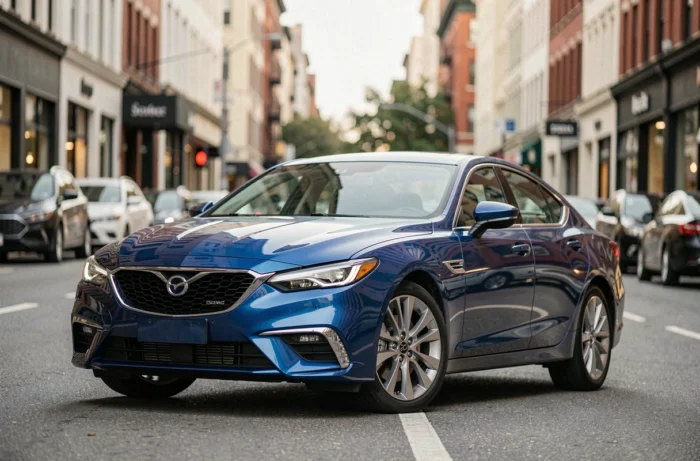
The French automotive market no longer resembles what it was two years ago. Comparing the best cars on the current market requires going beyond simple rankings based on catalog prices to include taxation, actual usage costs, and access to charging.
Actual monthly cost by engine type: the table that changes the comparison
Buying guides often rank vehicles by purchase price or fuel consumption. According to Roole data for 2026, two-thirds of the monthly automotive bill do not depend on the kilometers driven but on fixed costs: insurance, depreciation, financing. Comparing only consumption skews the ranking.
| Engine Type | Monthly Fixed Cost (insurance, depreciation, credit) | Variable Cost (fuel/energy, maintenance) | Tax Advantage 2026 |
|---|---|---|---|
| Electric (new) | High (higher catalog price) | Low (charging, reduced maintenance) | Environmental bonus, social leasing under conditions |
| Simple Hybrid | Medium | Medium (moderate consumption) | No specific bonus |
| Plug-in Hybrid (PHEV) | High | Variable (depends on actual charging) | Weight penalty for heavy SUVs |
| Gasoline | Medium to low | High (rising fuel prices) | None |
| Diesel | Medium | Medium to high | Taxed unfavorably, restrictive ZFE zones |
This table shows that a new electric vehicle, despite a higher fixed cost, can be cheaper over time due to reduced variable costs and public subsidies. In contrast, the plug-in hybrid loses its appeal for drivers who do not charge regularly, as the overconsumption in thermal mode combined with the weight penalty negates the theoretical advantage.
To refine this type of comparison according to your preferred segment, you can consult automobile-reference.com for cars which details specifications by model and category.

Taxation and subsidies 2026: the real filter before choosing a car
French taxation profoundly alters the attractiveness of certain engine types. Competitors rarely address this aspect other than with a quick mention of the environmental bonus. In 2026, the calculation is more complex.
Social leasing: an alternative to traditional credit
Social leasing has become a determining factor in car choice. This scheme, conditioned by household income and professional use of the vehicle, allows access to a new electric car for a rent much lower than a traditional LOA. Comparing the total cost of a cash purchase, a standard LOA, and social leasing over the same duration reveals significant differences.
Weight penalty and SUVs: an additional cost to consider
Heavy plug-in hybrid SUVs face a double fiscal impact: weight penalty at purchase and actual consumption often exceeding manufacturer data. For a buyer hesitating between a PHEV SUV and a comparable pure electric model, the total cost difference over five years clearly favors the electric if access to a home or nearby charging point exists.
- Environmental bonus maintained in 2026 for new electric vehicles, but with stricter environmental scoring rules that exclude certain models assembled outside Europe
- Weight penalty applicable from a specific threshold, penalizing large plug-in hybrid SUVs sometimes more than equivalent thermal models
- Social leasing available under income conditions, covering a selection of electric models with a capped monthly rent
Used electric: the segment that changes the game in 2026
Sales of used electric cars have increased by 52% in the first eight months of 2026. This acceleration alters the budget comparison between new and used in a way that traditional rankings do not yet capture.
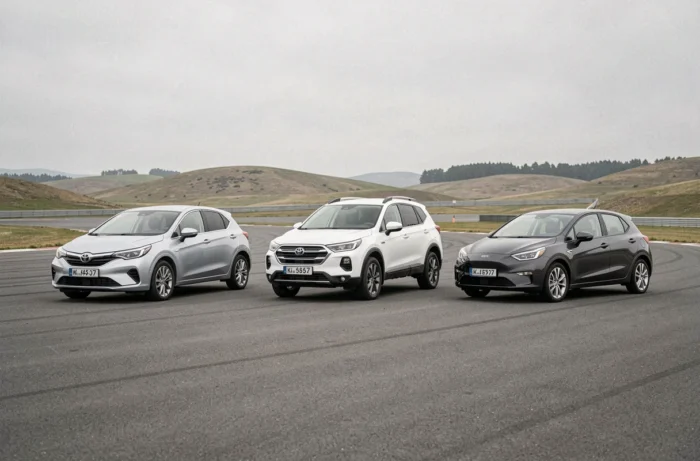
The supply of used electric vehicles is expanding with the arrival of models from first LOAs that have reached maturity. Renault Mégane E-Tech, Peugeot e-208, or Tesla Model 3 can now be found at prices significantly lower than their new price. The depreciation, historically high on used electric cars, tends to stabilize as demand catches up with supply.
Points to check before buying a used electric
The condition of the battery determines the actual value of the vehicle. A battery health certificate (State of Health) above a certain threshold guarantees an autonomy still close to new. Without this document, the risk of overpaying for a vehicle with degraded capacity is real.
- Request the SoH (State of Health) certificate of the battery, ideally through an independent diagnosis and not just the manufacturer’s report
- Check the charging history: a majority use of fast DC charging accelerates cell degradation
- Verify the compatibility of the provided charging cable with your home installation or the nearest charging point
- Ensure that the vehicle is eligible for used electric purchase aids, which vary according to the age and price of the model
Gasoline, hybrid, or electric: compare based on annual mileage
The choice of engine type is not limited to a technological preference. Annual mileage remains the most discriminating factor in determining the least expensive engine to use.
For drivers covering less than 10,000 km per year in urban areas, electric dominates if a charging solution exists. The simple hybrid (like the Toyota Yaris or Renault Clio E-Tech) remains relevant for those without access to a charging point and driving in the city. Diesel is no longer competitive for low-mileage drivers due to maintenance costs (particulate filter, AdBlue) and increasing ZFE restrictions.
For high-mileage drivers exceeding 25,000 km per year, mostly on highways, simple hybrids or gasoline remain competitive as long as the fast charging network does not uniformly cover regular routes. Conversely, a suburban driver with a garage and home charging point will find that used electric offers the best total cost per kilometer in 2026.
The current market is no longer just a fixed ranking of the best cars. The right comparison incorporates actual taxation, accessible financing methods, and driving profiles. A reasonably priced used electric model can prove more economical over five years than a new premium plug-in hybrid SUV.