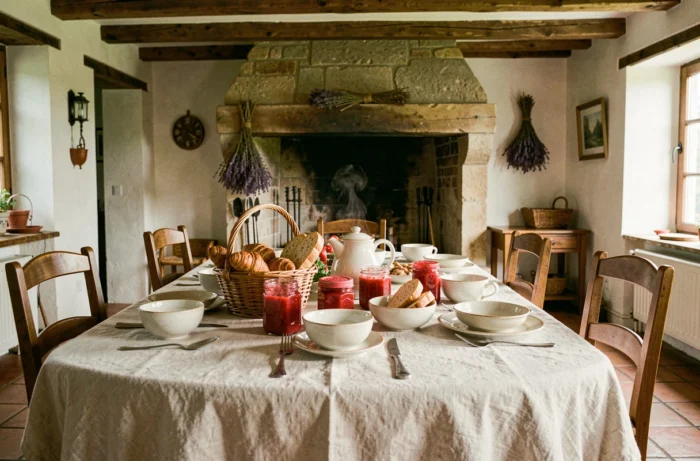
When you arrive at a guesthouse with a suitcase, you often leave with a local producer’s address, a walking spot that no guidebook mentions, and the memory of a breakfast that no hotel buffet can replicate. The French art of living in an authentic guesthouse lies in these concrete details, much more than in a marketing promise.
What distinguishes a guest room from a tourist rental in regulatory terms
Before booking, people often confuse guest rooms with seasonal rentals. The difference is not just a matter of vocabulary: it conditions the type of welcome received.
A guest room implies the presence of the owner on site and the inclusion of breakfast in the price. The accommodation is located in the host’s main residence, which mechanically limits the capacity and preserves a domestic setting.
The Le Meur law of November 19, 2024, strengthened the regulation of tourist rentals, with a stricter registration procedure. Guest rooms, on the other hand, maintain a separate declaration at the town hall and are not classified as these rentals. In other words, choosing a guest room means opting for a legal framework that guarantees personalized hospitality.
For operators, the fiscal context has changed: since 2025, the micro-BIC regime allowance has decreased from 71% to 50%, and the associated revenue ceiling has been lowered from 188,700 euros to 77,700 euros. This constraint pushes owners to focus more on the quality of the experience to justify their rates, which directly benefits travelers.
This commitment can be found at addresses like la-maison-de-daniel.fr, where the welcome is based on direct interaction with the hosts rather than a key box system.
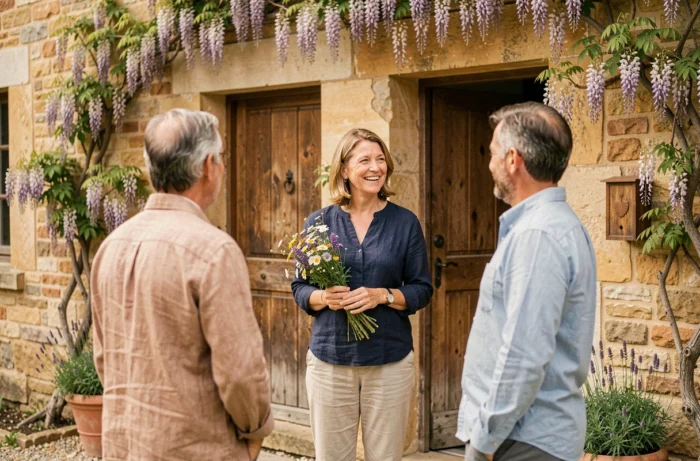
Breakfast in a guesthouse: the true marker of the French art of living
You can judge an authentic guesthouse by its breakfast. It’s the moment when hospitality takes a tangible form, far from packets of industrial jam.
What you find on a well-set guest table
- Homemade jams made with fruits from the garden or a nearby producer, often rotating with the seasons
- Fresh bread from a local baker, sometimes baked on-site when the house has a wood oven
- Farm dairy products (yogurts, fresh cheese, butter) purchased through short supply chains
- A hot drink served in mismatched crockery, collected over the years
This morning meal transforms the night of accommodation into a terroir experience. Breakfast becomes an extension of the territory rather than a standardized service. In Provence, you find lavender honey and fresh figs. In Bordeaux, warm cannelés. Near Saint-Malo, semi-salted butter and wheat pancakes.
Guesthouses in rural areas: why demand is increasing
Rural destinations now account for a majority of bookings on peer-to-peer rental platforms, according to the summer 2026 report published by Atout France. This is not a passing trend.
Several concrete factors explain this shift:
- The cost of accommodation in cities (Nice, Bordeaux, Paris) has risen, making rural guesthouses competitive in terms of value for money
- Partial remote work allows for longer stays during the week, favoring destinations away from urban centers
- The search for a calm setting with a garden or terrace has intensified after successive lockdowns
In practice, you can find guesthouses in regions that were not on the classic tourist radar. Villages in Lot, Aveyron, or Perche attract clientele that would have booked a hotel in the city center a few years ago.
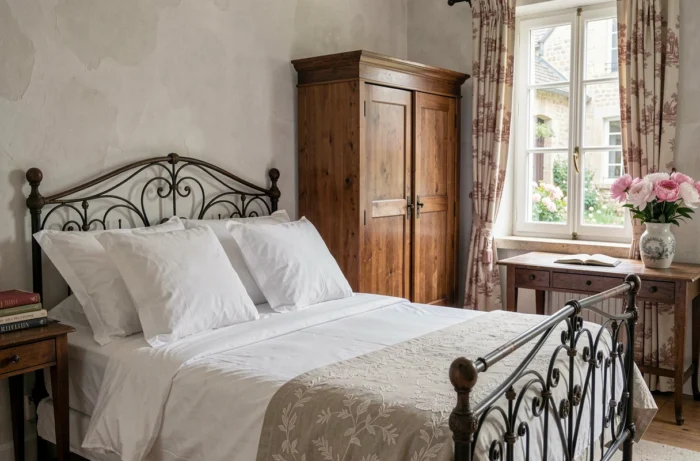
Recognizing an authentic guesthouse before booking
Online photos are not always enough. A few clues can help distinguish a sincere address from accommodation that borrows the codes without having the substance.
The number of rooms
A guesthouse is legally limited in capacity. Beyond five rooms, it falls outside the regulatory framework of guest rooms and enters that of hotels. When a listing offers eight rooms while presenting itself as a guesthouse, caution is warranted.
The presence of the host
An owner who fully delegates hospitality to a manager is no longer truly offering a guest room in the strict sense. You then lose what makes the value of the formula: personal recommendations, tailored stays, morning conversations.
Detailed reviews
Feedback that mentions the host’s first name, a specific dish, or a stay anecdote is more reliable than overall ratings. A review that describes a lived experience is worth more than a five-star rating without comment.
Reviews vary on this point depending on the platforms, but it is noted that specialized guest room sites filter fake reviews better than large generalist marketplaces.
The French art of living is not just about decor
The French art of living is often associated with blue shutters, stone walls, and linen tablecloths. Decor matters, but what anchors a guesthouse in authenticity is more about how the host shares their daily life.
An owner who opens their estate, shows visitors around their park, explains the history of the building, or invites guests to the dinner table in the evening offers something that no hotel chain can replicate. Authenticity is measured by the generosity of the welcome, not by the number of exposed beams.
This approach to the stay, rooted in a place and carried by people, remains the best argument for guesthouses against the standardization of the tourist offer. Travelers who return each year are not looking for accommodation. They are looking for an address.