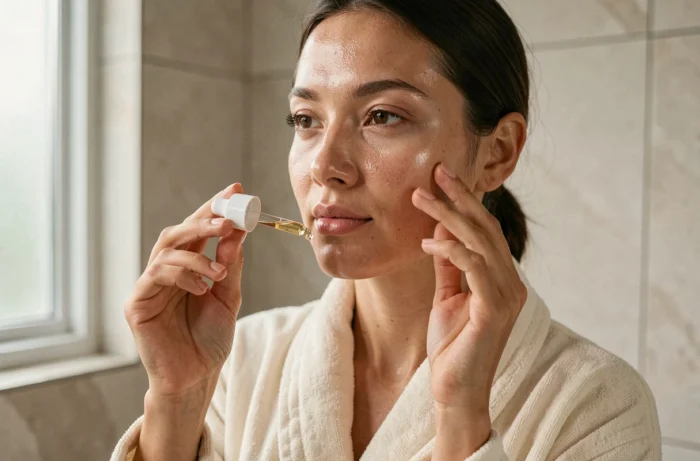
A skin that feels tight after cleansing, a foundation that shifts by midday, a “natural” product whose composition is not really understood: these daily irritants shape current beauty trends much more than fashion shows. The noteworthy innovations this fall address concrete skin, formulation, and regulatory issues.
Skin Barrier and Resilience: The Real Criterion for Choosing a Face Care Product
When applying a serum or cream, we often seek a visible result (radiance, smoothing, hydration). The underlying trend goes further: according to Mintel (“Beyond Skincare Protection,” September 2026), consumers are now interested in skin resilience and preventive strengthening of the skin barrier.
Specifically, this means prioritizing products that restore the hydrolipidic film rather than formulas that merely cover a symptom. We look for textures that respect skin pH, active ingredients like ceramides or prebiotics, and we avoid overly stripping cleansers that weaken this barrier.
For those who want to explore product ranges oriented towards this approach, regularly updated selections can be found on planete-beaute.com, allowing for composition comparisons before purchase.
The shift in mentality is clear: instead of multiplying the steps of a routine, we reduce the number of products to focus on those that sustainably strengthen the skin. Fewer layers, more coherence between each care product.
Longevity Beauty Routine: When Makeup and Health Merge
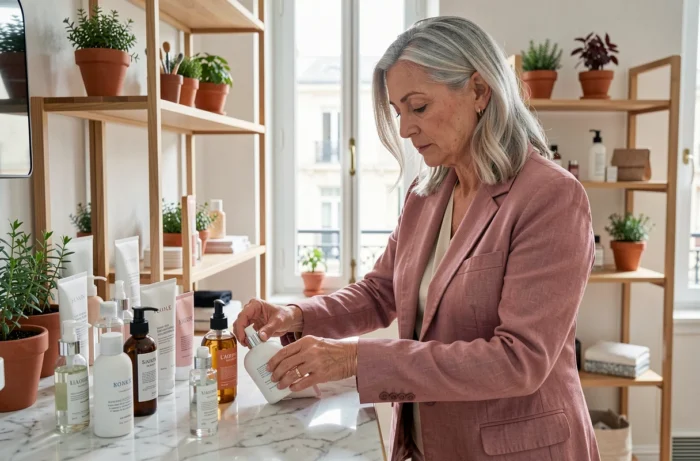
The boundary between skincare and makeup is fading. Hybrid products (foundation enriched with anti-aging actives, lip balm with SPF and peptides) are no longer just marketing gadgets. They meet a real need: we don’t always have time to apply a serum, cream, sunscreen, and then foundation.
Beauty and Preventive Health, Not Just Corrective
Mintel (“2026 Global Beauty and Personal Care Predictions,” cited by Nutraceuticals World in September 2026) identifies a shift in cosmetic promises towards preventive health. Brands are now combining topical treatments, nutrition, sleep, and stress management in their product messaging.
On the ground, this translates to facial creams formulated with adaptogens or dietary supplements sold alongside a serum. Feedback varies on this point: perceived effectiveness largely depends on regular use and overall lifestyle.
What changes in the daily routine is that we no longer separate the “morning care” from the rest. Makeup becomes a vehicle for actives, and product selection is based as much on the INCI list as on the shade.
Eco-Friendly Claims in Cosmetics: What Changes Starting September 2026
We still see mentions like “natural,” “eco-responsible,” or “carbon neutral” on many packages. Starting September 27, 2026, European directive 2024/825 will make these claims much harder to use without proof.
What the Directive Specifically Imposes
- Generic environmental claims must be supported by verifiable data, not just declarations.
- Eco-labels must rely on recognized certification or an independent verification system.
- An environmental benefit related to a single ingredient or packaging can no longer be presented as that of the entire product.
For us as consumers, this means we will finally be able to distinguish a product that is truly responsibly formulated from a greenwashed, meaningless package. According to CIRS Group (September 2026), this regulation directly targets cosmetic greenwashing that obscured market clarity.
How to Adapt Your Purchases Right Now
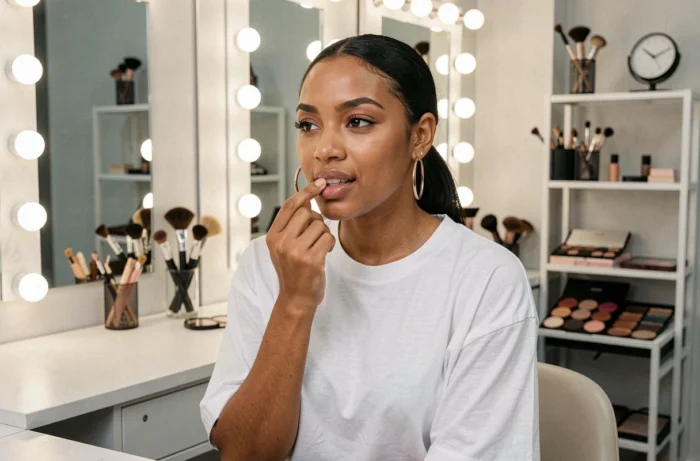
You can start by checking if a brand displays a third-party certification (Ecocert, COSMOS, Natrue) rather than just a home logo. If the packaging mentions “ingredients of natural origin” without a percentage or reference, it’s a weak signal.
The traceability of certain raw materials like palm oil is also becoming a concrete issue for the cosmetics industry. Reading the INCI list remains the most reliable gesture to evaluate what we are actually applying to our skin.
Makeup and Face Care Trends: What’s Worth It in Your Routine
Rather than listing products, we can reason by daily gesture and assess what has really changed.
Facial cleansing is shifting towards balm or oil textures that preserve the skin barrier, replacing aggressive foaming gels. For skincare, concentrated formulas (serums based on ceramides, niacinamide, low molecular weight hyaluronic acid) are gaining ground against overly diluted multi-use creams.
On the makeup side, the “visible skin” trend persists. Lightweight foundations with a natural finish dominate, and glossy textures are returning on lips and eyelids. Heavy and covering makeup is receding in favor of transparency.
- Gentle cleanser (pH close to skin, without harsh sulfates) as a non-negotiable first step.
- A targeted serum rather than three layered products: we choose a main active based on our need (hydration, radiance, firmness).
- Sun protection integrated into day care or foundation, applied every morning including indoors.
This gesture-based sorting avoids accumulating products that neutralize each other or overload the skin without measurable benefit.
This season’s beauty trends converge on a common point: informed simplification. We buy less, read labels better, and expect brands to prove what they claim. The European directive of September 2026 on eco-friendly claims will accelerate this movement, and routines that endure are those that start from the skin, not the packaging.