
When a parent or loved one begins to lose mobility, the question of living arrangements quickly arises. In Montpellier, the options for senior care are not limited to the binary choice between home and nursing home. Several intermediate solutions exist, each catering to a specific level of autonomy and lifestyle.
Senior housing and intergenerational links: a Montpellier model still little known
You may have heard of traditional senior residences. Less visible, another format is developing in Montpellier: senior housing linked to a childcare facility. The principle is simple. A single site combines adapted housing for autonomous elderly people and a nursery or space for young children.
This proximity is not cosmetic. It creates daily opportunities for contact, exchange, and sometimes shared activities. For an elderly person living alone, encountering families in the common areas every morning changes their perception of their environment.
This type of project is part of a broader trend, driven by real estate operators and social landlords who are rethinking the mix of uses within the same building. Choosing the right senior care option in Montpellier requires knowledge of these alternatives, which are not always listed in the usual directories.
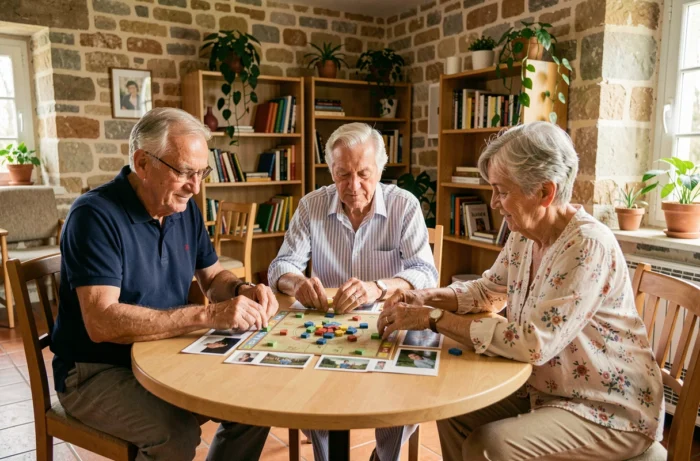
Senior service residence in Montpellier: what the formula really entails
The term “senior residence” refers to very different structures. All offer private accommodation (studio or T2), but the included services and their costs vary significantly.
Basic services and optional benefits
Generally, the rent covers furnished accommodation, heating, and access to common areas (lounge, garden, sometimes restaurant). Some residences also offer a hair salon, a communal dining room, or a landscaped park.
Care services are not included in a service residence. It is not a nursing home. The person must be sufficiently autonomous to manage their daily life, even if they need to call on external caregivers for certain tasks.
Concrete criteria for evaluating a residence
Before signing, a few points deserve verification:
- The proximity of public transport (tram, bus) – a determining factor when driving becomes difficult. Some Montpellier residences are located less than five minutes from a tram stop.
- The possibility of having a pet, often refused by default in medicalized structures but accepted in several service residences in the city.
- The presence of a team on-site during the day and an emergency call system at night, two elements that vary from one establishment to another.
- The actual amount of additional charges (catering, cleaning, laundry), which can represent a significant portion of the monthly budget.
Home care in Hérault: services and available assistance
The majority of seniors prefer to stay at home as long as possible. In Montpellier and Hérault, several systems facilitate this choice.
Home care services cover a wide spectrum: personal hygiene, meal preparation, shopping, accompaniment to medical appointments, housing maintenance. Organizations like home care services intervene according to personalized aid plans, often partially funded by the personalized autonomy allowance (APA).
The Hérault department also provides the Departmental Houses of Autonomy. These offices guide families towards suitable systems and help with aid application processes. It is a useful entry point when one does not know where to start.
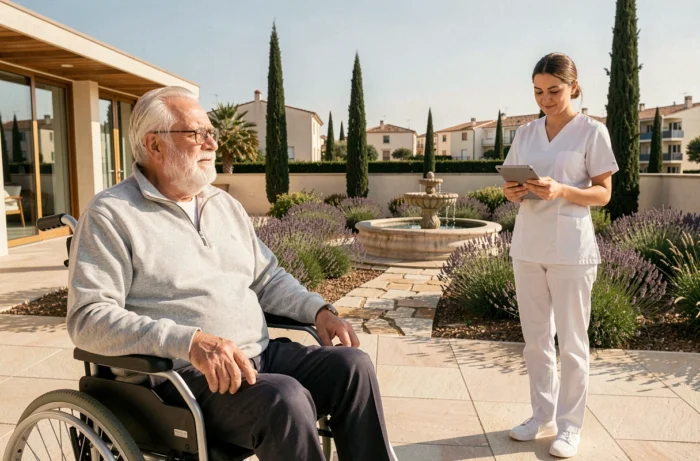
Fall prevention: an underestimated issue
In Occitanie, specific programs target fall prevention among the elderly. Why this particular subject? Because a fall is often the trigger for a rapid loss of autonomy and institutionalization.
A well-followed prevention program significantly delays the loss of autonomy. These actions combine balance exercises, housing modifications (grab bars, appropriate lighting), and monitoring by health professionals.
Golden Age Clubs in Montpellier: the role of municipal activities
The well-being of seniors is not limited to housing and care. Social isolation remains a major factor in the deterioration of physical and mental health.
The Montpellier Municipal Social Action Center (CCAS) manages the Golden Age Clubs, a network of activities aimed at retirees. For the 2026 school year, the program has expanded from three to five neighborhood clubs: Paul-Valéry, Paul-Boulet, La Cavalerie, Baroncelli, and Laure-Moulin.
This geographical extension has a specific goal: to bring activity locations closer to participants’ homes. The offerings include a variety of disciplines:
- Aquagym and swimming, supervised by instructors trained for the senior public.
- Gymnastics and artistic activities, adapted to different levels of mobility.
- Day trips and hikes, which maintain regular social connections outside the neighborhood.
Registrations are organized over several days at the beginning of the school year. This neighborhood-based structuring facilitates access for individuals who have difficulty moving.
Between intergenerational housing, service residences, home care with caregivers, and municipal prevention activities, Montpellier offers a range of responses that go beyond the classic nursing home or home model. The relevant choice primarily depends on the current level of autonomy and available support. Mapping these options early, before an emergency forces a decision, remains the best strategy to preserve a loved one’s quality of life.