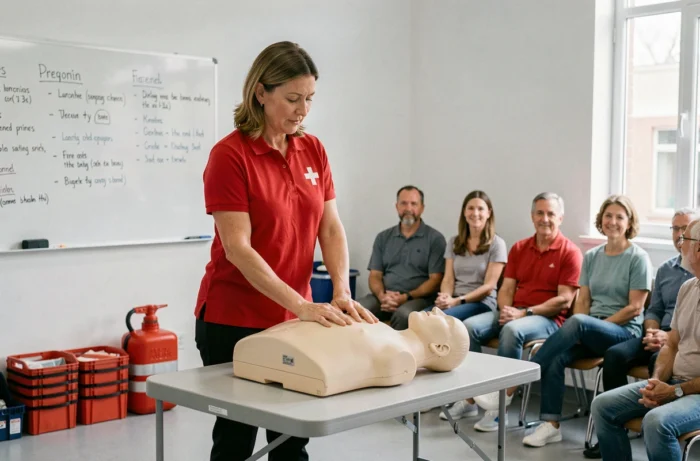
You know how to apply a tourniquet, perform CPR, and place a victim in the recovery position. Teaching these techniques to others requires a specific training pathway, regulated by the State. The path to becoming a first aid trainer involves mandatory certifications, affiliation with an authorized organization, and regular updates of your teaching skills.
National Technical References of 2026: What Changes for First Aid Trainers
Since the decree of July 7, 2026, published in the Official Journal on July 11, 2026, the previous national recommendations from December 2023 have been replaced by national technical references enforceable in court. This change in legal status has a direct consequence on your future profession.
Each trainer must prove that their content and pedagogy align with these documents. An authorized organization that continues to use outdated training materials takes on liability. If you are preparing to enter the profession, your course materials must reflect these references from day one.
This requirement may seem burdensome, but it also clarifies expectations. Instead of navigating through multiple versions of protocols, you have a single foundation. Those who wish to become a trainer with Soutien Adom will find a structured pathway around these recent regulatory requirements.
PAE FPSC, PAE FPS, and PAE FPSST: Choosing the Right Pedagogical Certification
First aid encompasses several fields, each requiring a distinct pedagogical certificate. Before enrolling, identify the audience you want to train.

- PAE FPSC (Applied Pedagogy for First Aid Trainer in Civic First Aid): it allows teaching PSC1 to the general public. This is the most common entry point for a beginner trainer.
- PAE FPS (Applied Pedagogy for First Aid Trainer): it enables training first aid team members for PSE1 and PSE2. This level is aimed at those who want to work with civil security associations or intervention teams.
- First Aid Trainer Certificate (SST): it falls under the Health Insurance – Occupational Risks network and allows training workplace first aiders in companies. The target audience and regulatory framework differ from PSC1.
You do not need all three to get started. A trainer targeting businesses will focus on SST. A trainer oriented towards civil associations will start with PAE FPSC and then progress to PAE FPS. Each certification opens a distinct market, with its own clients and pricing.
Concrete Prerequisites Before Entering Pedagogical Training
You cannot enroll directly in a PAE. Several prerequisites must be met, and they vary depending on the chosen field.
For PAE FPSC, you must hold an up-to-date PSC1. For PAE FPS, you need to have the PSE2 and demonstrate regular practice within a rescue team.
Affiliation with an organization authorized by the Ministry of the Interior is mandatory. You cannot teach first aid independently without this affiliation. Red Cross, Civil Protection, UDPS, or accredited private organizations: it is under their authority that you will conduct your training and that your activity will be monitored.
Maintaining Skills and Continuing Education for First Aid Trainers
Obtaining certification is not enough. A trainer who does not update their skills loses their right to teach. Continuing education, often referred to as MAC (Maintaining and Updating Skills), must be undertaken at regular intervals.
Why this requirement? First aid protocols evolve. The July 2026 decree is proof of this: technical references change, and a trainer teaching outdated techniques endangers future rescuers. The MAC covers both technical skills and pedagogical methods.
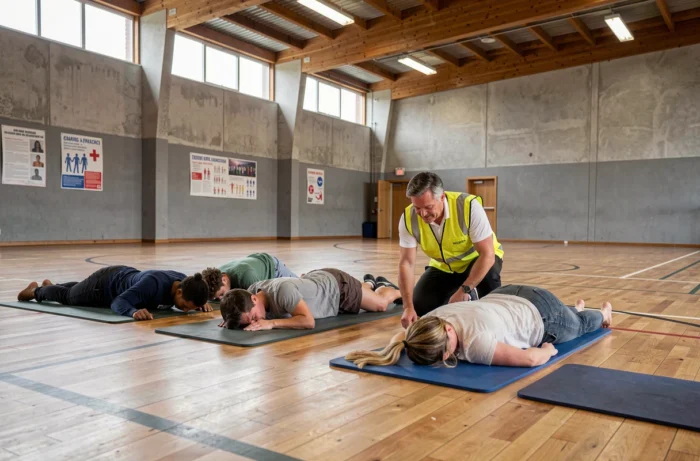
On the practical side, the Prevention Passport, gradually rolled out, centralizes the training attended by employees. SST trainers must report certain sessions there. This digital system alters the traceability of skills in companies and adds an administrative responsibility to the trainer’s role.
Building Pedagogy That Goes Beyond Technical Skills
The PAE teaches you precise pedagogical methods: practical demonstration, situational training, formative assessment. Applying these methods mechanically does not make a good trainer.
What distinguishes an effective trainer is their ability to adapt their discourse. A group of employees in a logistics warehouse does not face the same risks as a class of middle school students. Contextualizing each training scenario enhances the retention of techniques by trainees. Preparing realistic situational exercises related to the daily lives of the trained audience requires a level of preparation that certification alone does not cover.
An experienced trainer renews their scenarios, observes recurring mistakes from their trainees, and adjusts their exercises. This continuous improvement loop makes the difference between a course that is endured and training that truly saves lives.
The journey to becoming a first aid trainer combines regulatory certification, affiliation with an authorized organization, and ongoing updates. The national technical references of 2026 reinforce this alignment requirement. Choosing your field (PSC1, PSE, or SST) from the start allows you to focus your efforts on a specific market and build a solid pedagogical expertise rather than dispersing your skills.