
The feet support the body’s weight with every step and play a direct role in returning blood to the heart. The plantar pump, activated by the foot’s pressure on the ground, compresses the veins of the arch and propels venous blood upward. A shoe that hinders this mechanism can lead to sensations of heavy legs, swelling at the end of the day, and ultimately, venous disorders.
Scholl shoes are designed to support this natural mechanism with a fit and insoles that accompany the rolling motion of the step.
Plantar pump and venous return: the mechanism that the shoe must preserve
With each stride, the venous network located under the plantar arch compresses under the body’s weight. This phenomenon pushes blood toward the deep veins of the calf, which take over to send it back to the heart. This is known as the veno-muscular pump: without it, gravity would keep blood in the lower limbs.
The problem arises when the shoe limits ankle mobility or crushes the arch without supporting it. On hard ground, in a rigid shoe, the ankle’s range of motion decreases. The contraction of the calf is less effective, and blood stagnates more in the veins of the legs.
Scholl models aim to correct this flaw by offering insoles that conform to the arch of the foot and a fit that is flexible enough not to block ankle movement. A detailed article explains how Scholl shoes for blood circulation act on this support mechanism and the rolling motion of the step.
Scholl insoles and muscle activation: what changes concretely underfoot
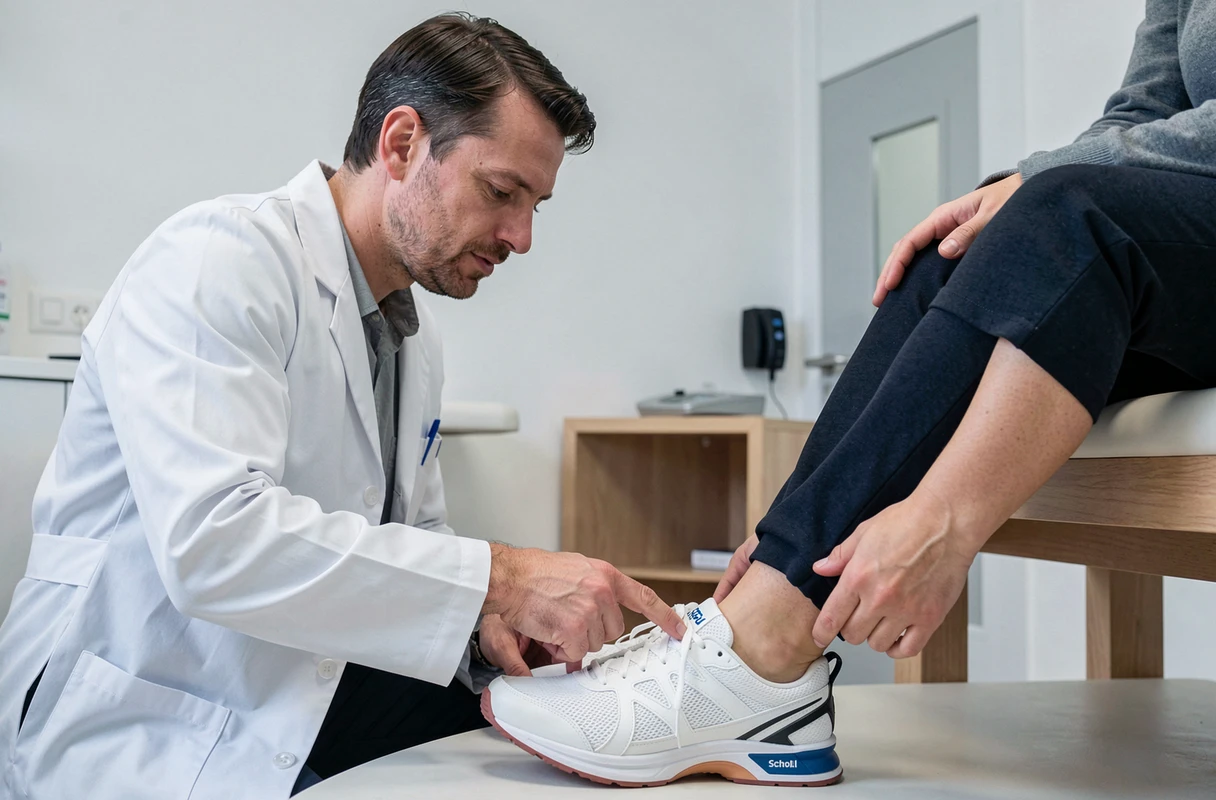
Scholl is not limited to the fit. The brand also offers anti-pain insoles designed to complement or replace the original insoles of a classic pair of shoes. Their role goes beyond simple shock absorption.
A well-designed insole distributes pressure across the entire surface of the foot instead of concentrating it on the heel and forefoot. This distribution changes how the muscles of the foot and calf work on a daily basis.
Technologies integrated into Scholl insoles
The range uses several approaches to adapt support to the wearer’s profile:
- The GelActiv system incorporates a gel that absorbs impacts at the heel and under the metatarsals, reducing muscle fatigue during prolonged standing.
- The memory foam cushion gradually conforms to the shape of the foot, providing personalized support that avoids pressure points hindering circulation.
These technologies do not replace an orthopedic insole prescribed by a podiatrist. Their value lies in improving daily comfort for feet without serious pathology, promoting a more regular muscle activation with each step.
Foot profile and timing of purchase: two variables that condition health benefits
A rarely discussed point in content about comfort shoes: the perceived benefit depends as much on the choice of model as on when the shoe is tried on. Feet swell throughout the day due to gravity and heat. Trying on a pair in the morning, when the foot is at its minimal volume, often leads to choosing a size that is too tight.
Trying on shoes at the end of the day remains the most reliable field recommendation to ensure proper support without compression. A shoe that is too snug compresses the superficial veins of the foot and negates the expected circulatory benefits.
Space at the forefoot and adjustment of support
Podiatrists emphasize two criteria that the Scholl brand incorporates into several of its models: sufficient space in front of the toes and an adjustment system (strap, velcro, lace) that allows for tightening to be adapted to the foot’s volume.
A wide foot or a foot that swells regularly will gain no advantage from a narrow model, even if equipped with the best insole. The fit takes precedence over the technology of the insole when blood circulation is at stake.
Limits of comfort shoes for established venous disorders
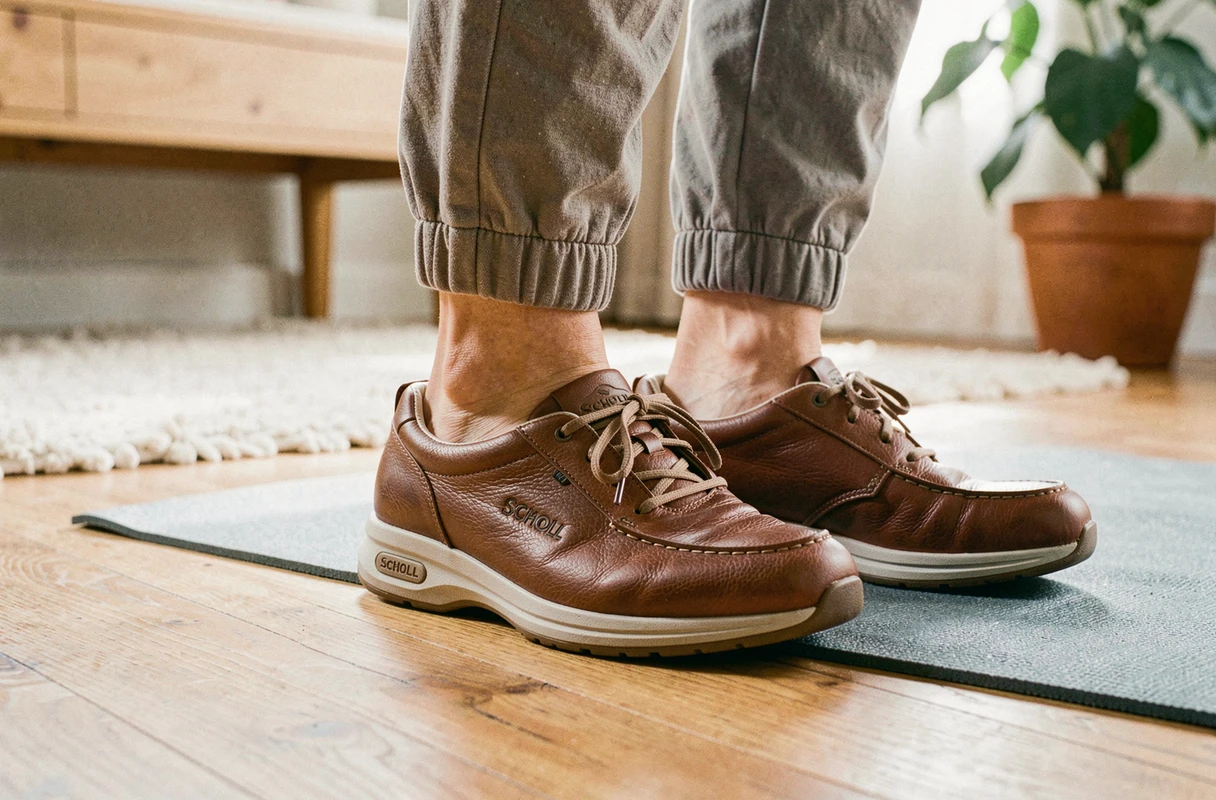
Attributing the ability to treat chronic venous disorders to a pair of shoes would be excessive. Scholl shoes improve walking comfort and promote the activation of the plantar pump, but they do not exert graduated compression comparable to that of a medical compression stocking.
The most documented solutions for venous circulation remain regular walking, medical compression prescribed by a doctor, and physical exercise.
Scholl shoes are positioned within a logic of prevention and daily comfort. They are a relevant complement for people prone to heavy legs, provided they are not considered a substitute for medical follow-up in cases of established venous disorders.
When to consult a healthcare professional
Persistent sensations of heaviness in the legs, swelling that does not subside overnight, or the appearance of visible veins (spider veins, varicose veins) warrant a consultation with a vascular doctor or phlebologist. The comfort of a shoe does not replace a diagnosis or treatment appropriate to the severity of the disorder.
Choosing a Scholl shoe suitable for the foot profile, tried on at the right time of day, and combined with regular physical activity remains the most coherent combination to preserve foot health and support blood circulation daily. For feet that swell, the most useful reflex is to ensure that the chosen model offers enough space and adjustment to accommodate volume variations without compressing the veins.