
You may have seen advertisements for insoles that claim to help you lose weight simply by walking. The Akusoli insoles are part of these products that circulate massively online, with promises of rapid weight loss through plantar stimulation. Before pulling out your credit card, it’s important to look at what lies behind these claims.
Regulatory status of Akusoli insoles: a product without medical control
When a product promises to affect metabolism or weight loss, we expect it to have been evaluated by a health authority. The Akusoli insoles are not classified as a medical device. This means that they have undergone no evaluation by the ANSM or by a notified body regarding their claims of weight loss or metabolic activation.
Orthopedic insoles prescribed by a podiatrist must meet a validated specification, including trials. The Akusoli insoles, however, are marketed as a simple comfort accessory. No clinical trial requirement applies before their market release.
This distinction is crucial. A product sold without clinical evidence can freely display enthusiastic testimonials on its site, but this does not replace scientific validation. Several health professionals have shared a medical opinion on the Akusoli insoles that supports this view.
Weight loss insoles and acupressure: why the promise doesn’t hold
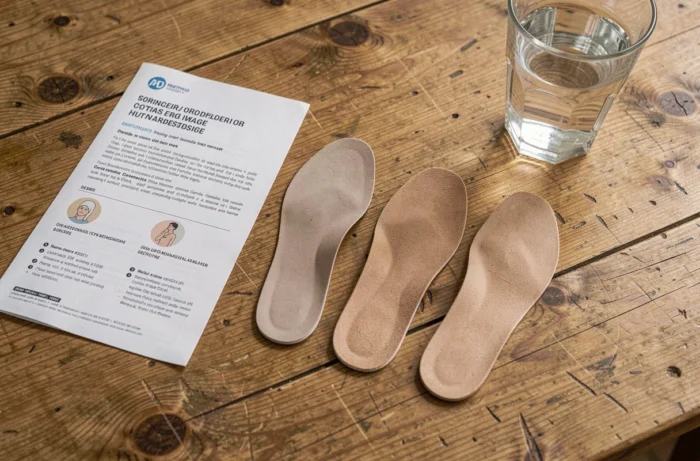
The principle being sold is simple: spikes or reliefs under the foot stimulate acupressure points related to the digestive system. This stimulation would activate metabolism and promote fat elimination. The idea is inspired by foot reflexology, a practice rooted in traditional Chinese medicine.
Have you ever noticed that after a long walk on pebbles, your feet feel more relaxed? Plantar stimulation produces a real sense of well-being. The problem arises when this effect is extrapolated to weight loss.
No published clinical study demonstrates that pressure under the foot triggers fat burning. Manufacturers of weight loss insoles generally propose three mechanisms:
- Stimulation of reflex points related to digestion would promote better metabolic regulation, but no rigorous protocol has confirmed this effect on weight.
- Posture modification would engage more stabilizing muscles, increasing energy expenditure, but this additional expenditure remains negligible compared to even moderate physical activity.
- Improved walking comfort would encourage more movement, which is plausible but depends on user behavior, not the insole itself.
In summary, the only minimally credible mechanism (walking more due to comfort) is not specific to Akusoli insoles. Any well-fitted insole could produce the same result.
30-day feedback: comfort yes, weight loss no
A documented follow-up over 30 days of daily use, published in August 2026 by Réponse Santé, reached a clear conclusion. Users reported an improvement in foot comfort and a reduction in fatigue at the end of the day, particularly among those walking long distances on hard surfaces.
However, no weight variation was measured during this period. Another structured feedback, cited by AllP Santé the same year, confirms this finding: the only weight loss observed in some testers came from dietary changes or physical activity conducted in parallel, not from the insoles.
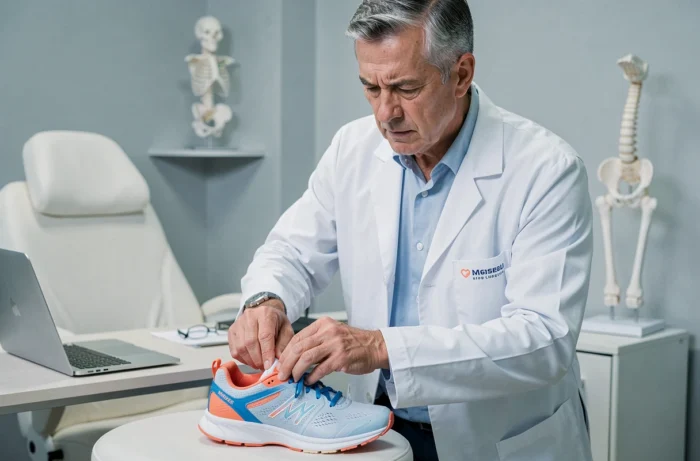
This result is not surprising. Weight loss relies on a sustained caloric deficit over time. Wearing insoles, even with acupressure spikes, does not significantly alter daily energy balance.
Akusoli insoles and health risks: concrete dangers
If these insoles do not lead to weight loss, can they at least be harmful? The main risk is not physical but financial and psychological.
The first danger is delaying appropriate care. An overweight person relying on weight loss insoles instead of consulting a doctor or dietitian is wasting precious time. Weight issues are sometimes accompanied by metabolic disorders that require medical follow-up.
Physically, spiked insoles can cause irritation or foot pain in individuals with sensitive feet, circulatory disorders, or diabetes. Podiatrists remind us that insoles that do not fit the foot’s morphology can worsen existing postural imbalances.
Why does this point matter so much? Because these insoles are sold in one size or with simple trimming, without an analysis of the foot arch or gait type. An orthopedic insole, on the other hand, is custom-molded after a podiatric examination.
Reliable criteria for evaluating a weight loss product
In the face of the plethora of products that promise weight loss without effort, a few guidelines can help sort through them:
- Has the product undergone clinical trials published in a peer-reviewed journal? If the answer is no, caution is warranted.
- Are the highlighted testimonials verifiable, or are they just before/after photos without context or identification?
- Does the manufacturer display a status as a medical device or dietary supplement with a registration number from a health authority?
- Is the proposed mechanism of action consistent with basic physiological knowledge about caloric expenditure?
The Akusoli insoles do not meet any of these criteria. This does not mean they are dangerous in a toxicological sense, but rather that they are more of a wellness gadget than a health product.
Weight loss remains a process that involves diet, physical activity, and sometimes medical support. No accessory worn passively can replace these three pillars. The Akusoli insoles offer acceptable walking comfort for some users, nothing more.