
Your dog is pacing, panting for no apparent reason, or compulsively licking a paw. The veterinarian found nothing abnormal. This type of situation is leading more and more owners to explore energy healing for dogs, a complementary approach aimed at restoring overall physical and emotional balance.
Regulation of Energy Healing for Dogs in France
Before discussing benefits, a rarely addressed point deserves your attention: the legal framework. In France, the Rural Code reserves veterinary medical and surgical acts exclusively for veterinarians. An animal energy healer cannot diagnose, store veterinary medications, or use medical equipment in their treatment room.
If the practitioner receives dogs in a dedicated space, it falls under the regulations for establishments receiving the public (ERP) of category 5. This implies a safety register, at least one extinguisher checked annually, posted instructions, and clear emergency exits.
Another nuance: as soon as the dog is kept beyond the session (half a day without the owner, for example), the activity may fall under the regulations for pet boarding, requiring possession of the ACACED (certificate of knowledge for domestic pet species). On canisessence.com, the listed practitioners operate within this regulatory framework, which serves as a first filter of seriousness.
An energy healing session never replaces a veterinary consultation. It serves as a complement, once all medical causes have been ruled out or addressed.
Dog Stress and Anxiety: What the Energy Approach Specifically Targets
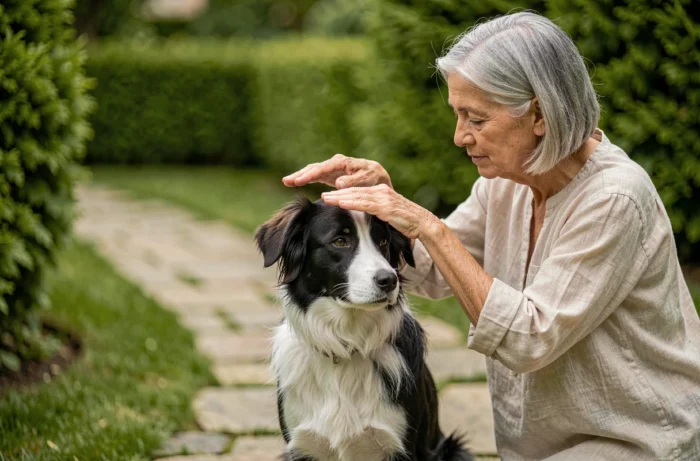
You may have noticed that some dogs tense up in the veterinarian’s waiting room, while others remain calm? This difference in reactivity reflects a deep emotional state, not just a fixed temperament. Energy healing specifically aims to act on this emotional layer.
The principle is simple to understand. Every living being has an energy flow that travels through the body. When this flow circulates freely, the animal is relaxed. When it gets blocked (after trauma, a move, the loss of a companion), signs appear: excessive licking, barking without a trigger, trembling, withdrawal.
The practitioner works to release these blockages through various techniques:
- Hand placement (animal reiki), where the practitioner places their palms a few centimeters from the dog’s body to transmit soothing energy. Most dogs yawn or lie down spontaneously during the session.
- Work on meridians, inspired by traditional Chinese medicine, which targets specific points along the body to restart energy circulation.
- Sound harmonization (tibetan bowls), whose low vibrations promote visible muscle relaxation within minutes.
Dogs often react faster than humans to these approaches. Their lack of mental filtering allows them to welcome the session without conscious resistance, which explains rapid bodily reactions: slowing of breath, closing of eyes, deep sighs.
Chronic Pain and Recovery: A Field Where Energy Healing Complements Veterinary Care
Arthritis, post-operative recovery, age-related pain: these situations generate discomfort that anti-inflammatories alone do not always cover. The energy approach intervenes here as a complementary support, not as a substitute.
A dog suffering from arthritis, for example, adopts compensatory postures that create secondary muscle tensions. A session of reiki or meridian work can help release these peripheral tensions and improve overall mobility, even if it does not act directly on the damaged cartilage.

During the recovery period after surgery, several practitioners report that dogs who have benefited from energy sessions return to normal behavior (appetite, desire to play, regular sleep) more quickly. These observations remain empirical and do not replace controlled clinical studies, but they align with what many owners describe.
Energy healing acts on the general state, not on the injury: this is a distinction to keep in mind to avoid disappointment.
How to Choose an Energy Practitioner for Your Dog
The sector is not regulated by a professional order, so the quality of practitioners varies significantly. A few concrete guidelines can help you sort through:
- The practitioner should always ask if the dog is under veterinary care and refuse to work on an animal without prior medical assessment.
- The session should take place in a calm environment suitable for the animal, with a gradual approach (no restraint, no forced manipulation).
- A good animal energy healer never promises healing. They speak of support, comfort, and rebalancing.
- The practitioner’s training should be verifiable: name of the organization, duration, content. Certifications in animal reiki or traditional Chinese medicine adapted for animals are the most common.
The first session generally includes a period of observation where the practitioner assesses the dog’s behavior, stress level, and areas of tension. This initial listening phase is a good indicator of professionalism.
Energy healing for dogs is neither a passing trend nor a miracle solution. It represents an additional tool in the range of care you can offer your pet, provided you remain clear about its limits and always maintain veterinary follow-up as the foundation of your companion’s health.