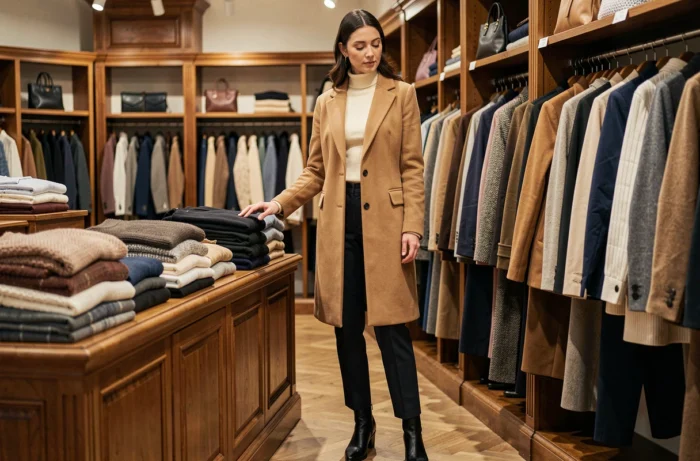
This season’s fashion is not just a checklist of items to tick off. The real change lies in a logic of transition: the fashion essentials bought for summer are now designed to stay in the wardrobe for the fall. Bermudas, leather jackets, derbies, or red pieces are no longer disposable seasonal purchases, but stylistic pivots that are reinterpreted from month to month.
Trans-seasonal pieces: bermudas and leather jackets change status
Until recently, bermudas were confined to the warm months. This season, specialized fashion media explicitly present them as a key piece to keep for September, worn with knee-high socks or under a light trench coat. Denim bermudas and their cargo version are the two cuts that appear most frequently in back-to-school selections.
The leather jacket follows the same trajectory. Worn open over a t-shirt in summer, it transitions to a fine knit as temperatures drop. These pieces do not change wardrobes; they change contexts. An article from late August 2026 listed six key summer pieces to absolutely keep for the fall, confirming this approach of clothing continuity.
To explore this summer-to-fall pivot logic, your stylish selection from Tendancez-vous gathers pieces that work precisely on this principle of transition.
Trendy colors and autumn 2026 fashion cuts: what structures the look
Cyan blue and bold reds dominate the palettes. These two color families share a practical advantage: they work equally well on a summer dress as on a fall sweater, reinforcing their role as a common thread in a wardrobe designed to last.
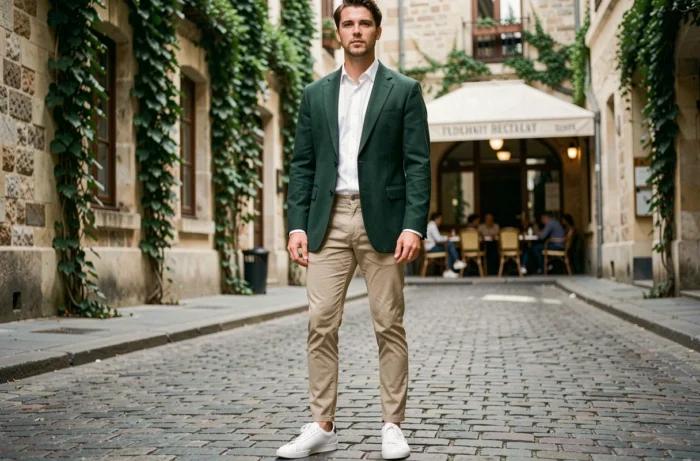
On the cut side, asymmetrical silhouettes and fluid fabrics define the season. Off-kilter hems, draped collars, and irregular ruffled skirts create movement without overwhelming the silhouette. These cuts accommodate variations in body shape and adapt to very different styles, from casual to more dressed up.
Some brands push very structured cuts (defined shoulders, fitted waists), while others focus on ample volume. The dominant trend remains fluidity, but the choice depends as much on body shape as on personal style.
Sustainable materials and anti-greenwashing directive: what weighs on fashion shopping
The European directive known as “Empowering Consumers” (EMPCO), set to take effect on September 27, 2026, prohibits vague environmental claims. The words “eco-friendly,” “sustainable,” or “green” can no longer appear on a label without verifiable proof. Specifically, a brand that labels a pair of jeans as “responsible” will need to rely on third-party certification.
This regulation changes the way we shop. Labels become a real sorting tool: if a garment makes an environmental promise without mentioning a standard or label, skepticism is warranted. The available data does not yet allow us to measure the actual impact of this directive on prices or the ranges offered in stores, but the legal framework is established.
- Check for the presence of a third-party label (GOTS, OEKO-TEX, EU Ecolabel) before trusting an “eco-responsible” mention
- Favor materials with documented traceability: European linen, certified organic cotton, lyocell
- Be wary of “green” capsule collections launched by ultra-fast fashion brands, whose growth remains strong despite the parallel rise of second-hand
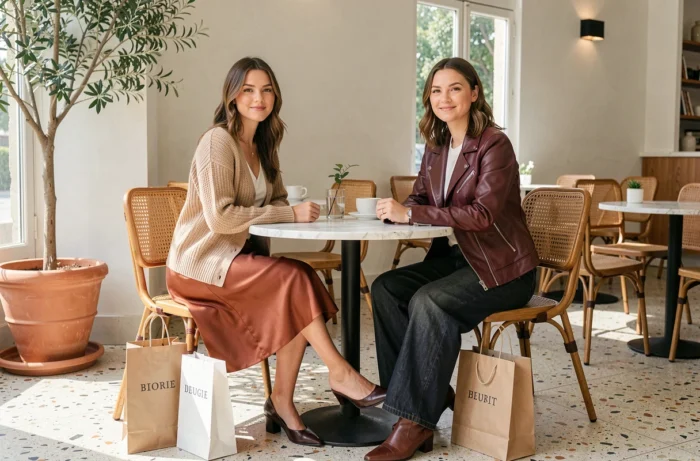
Unique trendy look: building a style beyond basic lists
Competitors all offer the same grid: white t-shirt, raw jeans, shirt, black dress. These pieces remain useful, but they do not create a unique look. Uniqueness comes from combinations, not isolated pieces.
A cargo bermuda worn with derbies and a structured bag creates a very different effect than the same bermuda with sneakers and a wicker basket. It is this combination mechanism that distinguishes a functional wardrobe from a personal one.
Three concrete levers allow you to break away from the generic look:
- Play with contrasts of materials within the same outfit (leather and linen, knit and denim) to create texture
- Introduce one strong color per outfit, no more: a bright red top on neutral bottoms is enough to anchor a silhouette
- Focus on accessories with strong character (colorful bag, detailed belt, shoes with visible soles) rather than on one more trendy garment
The baseball t-shirt, identified among the key pieces of the season, illustrates this logic well. Worn alone with shorts, it remains basic. Tucked under an oversized blazer with fluid pants, it becomes the quirky element that adds character to a structured outfit.
Second-hand and ultra-fast fashion: two realities coexisting in the fashion market
Second-hand and ultra-fast fashion are progressing simultaneously in France. This observation raises a question that style guides rarely address: the market is not polarizing between “virtuous” and “disposable,” it is fragmenting.
A consumer can buy a vintage jacket in the morning and order a low-cost top in the evening. The motivations are not contradictory: budget, availability, desire for novelty, search for rare pieces. The available data does not allow us to conclude that the rise of second-hand is slowing fast fashion, nor the reverse.
This observation weighs on the very notion of fashion essentials. Shopping “trendy and unique” this season also means deciding where to place your budget: on a few quality trans-seasonal pieces, on a mix of new and second-hand, or on frequently renewed low-cost volume. The EMPCO directive will at least make one of these choices more transparent.