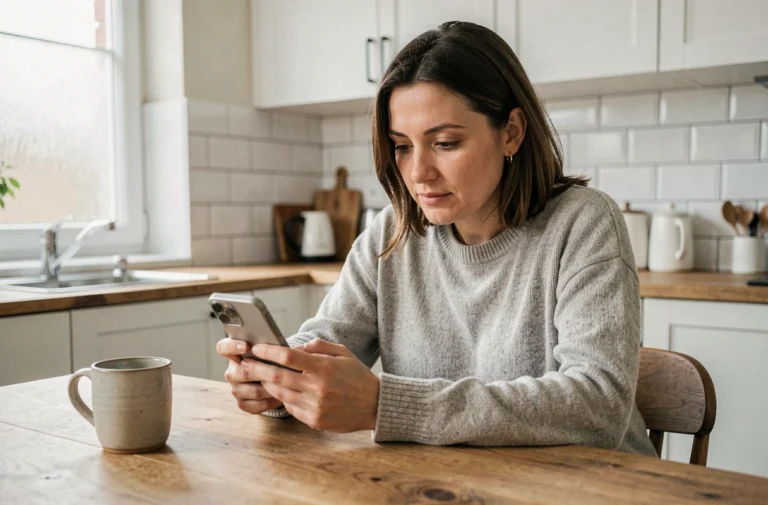
Summer 2026 in France is unfolding on several simultaneous fronts: rising household confidence, the regulation of artificial intelligence moving into reality, and a massive cyberattack against the tax administration that highlights the fragility of personal data. These three seemingly distinct axes paint a precise picture of what concerns and transforms the daily lives of the French in the middle of the year.
Household Confidence in France: A Rebound that Changes Purchasing Behavior
Have you noticed a slight resurgence of optimism around you in recent weeks? The figures confirm it. According to Insee (Quick Information No. 182, July 28, 2026), French consumer confidence has reached its highest level since March.
This rebound is not limited to a mere abstract indicator. Insee notes that the proportion of households considering it appropriate to save is increasing again. In clear terms, the French feel reassured enough to set aside money, reflecting a more stable perception of their financial situation.
This trend has direct repercussions on daily life. When confidence rises, purchasing decisions follow: home equipment, travel plans, online subscriptions. To track these developments over the weeks, the site avenirexpress.fr in detail regularly shares significant highlights of French news.
The positive savings climate also means that households anticipate fewer short-term difficulties. This is a signal that economists closely monitor, as it often precedes a more pronounced recovery in consumption come fall.

European Regulation on Artificial Intelligence: What Changes in August 2026
As of August 2, 2026, most obligations of the European regulation on AI have come into effect. Specifically, companies developing or using high-risk AI systems must now comply with precise requirements regarding transparency, technical documentation, and human oversight.
France has not yet finalized the designation of all its supervisory authorities. This delay creates a zone of uncertainty for French companies that do not always know which interlocutor to turn to in case of doubt about the compliance of their tools.
AI and Consumption: Automated Purchasing Agents Are Coming
AI is no longer confined to professional uses. An Accenture study (Consumer Pulse 2026, published on June 10, 2026) reveals that a majority of surveyed French consumers are willing to delegate purchasing tasks to an AI agent, provided they retain human control over the final decision.
This means that routine purchases (subscription renewals, recurring grocery shopping, price comparisons) could soon be delegated to automated assistants. The new European regulatory framework that has just come into effect will apply directly to these agents.
For consumers, the points of vigilance are concrete:
- Check that the AI agent used clearly displays its automated nature, as required by the European regulation on transparency
- Ensure that every purchase validated by an agent remains cancellable within the legal withdrawal periods
- Control the personal data shared with these tools, especially bank details and purchase histories
Cyberattack Against the DGFiP: Tax Data of Hundreds of Thousands of French Citizens Exposed
In mid-August 2026, the General Directorate of Public Finances (DGFiP) confirmed the theft of tax data concerning over 678,000 taxpayers. This leak, reported by Le Monde, Reuters, and several specialized media, constitutes one of the largest ever recorded against a French public administration.
The stolen data includes personal tax information, making it particularly sensitive. Unlike a simple email address, tax data can reconstruct part of a taxpayer’s wealth and income.
What Measures for Affected Taxpayers
The authorities have announced several provisions:
- Individual notifications to those whose data has been compromised
- A formal report to the CNIL, which will need to assess whether security measures were sufficient
- Enhanced restrictions on access to the affected systems to limit any further risk
For taxpayers, the main short-term risk is targeted phishing. A fraudster with real tax data can draft a fake letter from the administration that is much more convincing than generic spam. Any communication requesting bank details via email must be verified directly on impots.gouv.fr.

Consumption Trends in France: What Social Media Reveals About Lifestyles
Beyond major economic and digital issues, current trends in France can also be seen in online consumption habits. Two phenomena illustrate this summer dynamic well.
The first concerns housing. Mini-studios that can be installed in a garden, without a traditional building permit, are increasingly appealing to homeowners. This solution addresses a concrete need: to expand living space without moving or undertaking major renovations. The phenomenon reflects a persistent tension in the housing market, where prices in high-demand areas push households to optimize the space they already have.
The second relates to fashion and accessories. Items once thought to be reserved for another generation are making a strong comeback. The brooch, for example, is experiencing a notable resurgence on runways and social media. These fashion cycles, accelerated by the virality of short videos, transform forgotten accessories into sought-after items in just a few weeks.
These micro-trends are not anecdotal. They reflect real trade-offs: favoring the adaptation of existing items rather than purchasing new ones, whether for housing or fashion accessories. This is a consistent thread with the cautious confidence measured by Insee.
The start of the 2026 school year is therefore being prepared against a backdrop of enhanced digital vigilance, a European regulatory framework still in the works, and consumption that oscillates between budgetary caution and a desire for novelty. The coming weeks will reveal whether the rebound in confidence measured this summer translates into concrete purchasing decisions or remains a signal of waiting.